
Ayasofya Museum
Hagia Sophia is Istanbul’s most legendary monument—an architectural masterpiece that has served as a cathedral, a museum, and today a mosque—drawing visitors for its vast dome, mosaics, and layered history.
Hagia Sophia is one of the most extraordinary monuments in the world, located in the historic heart of Istanbul. Over the centuries, it has served as a cathedral, a mosque, a museum, and once again a mosque—making it a powerful symbol of the city’s layered history.
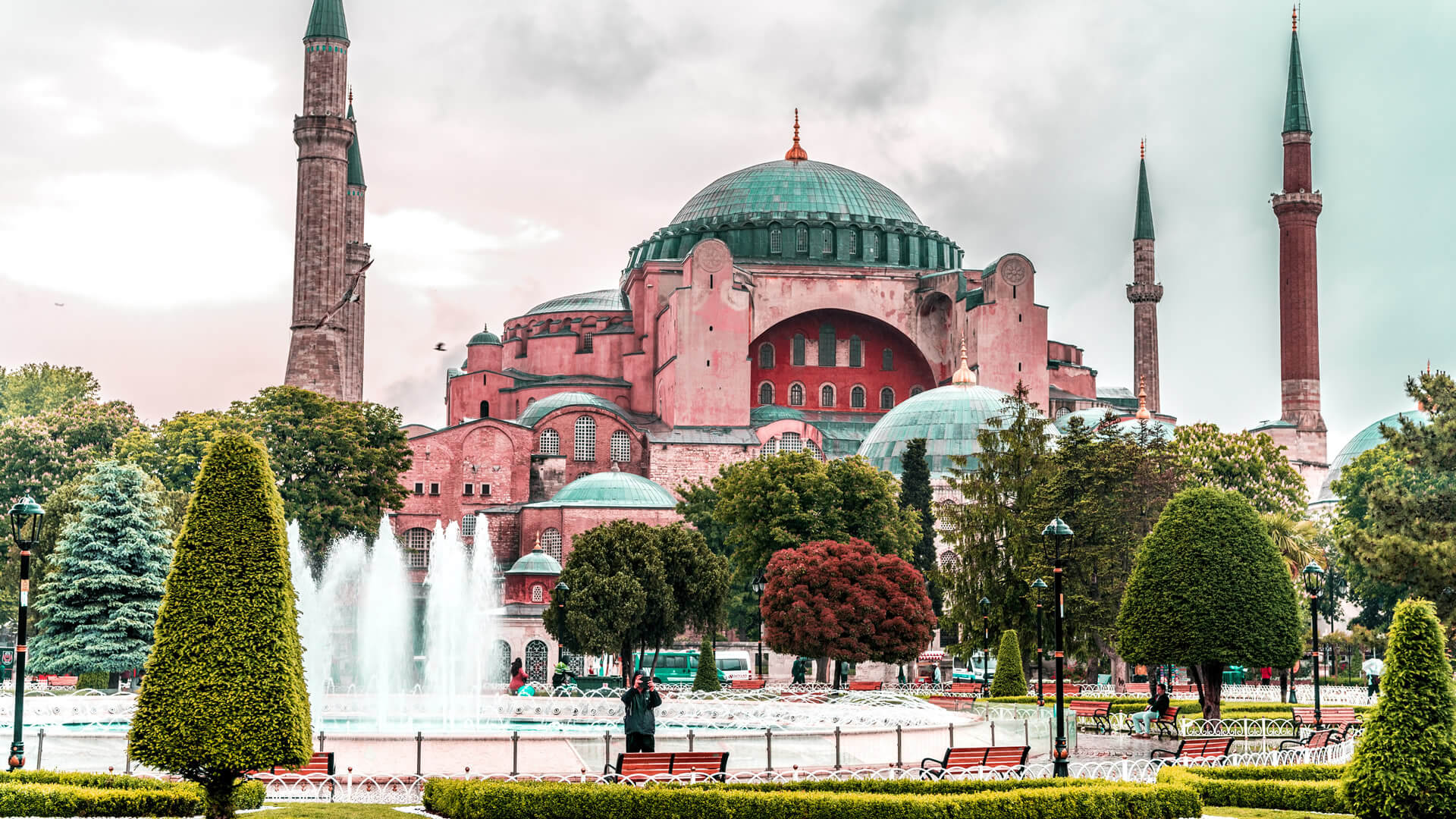
It was originally built in 537 AD under the rule of Justinian I as the main cathedral of the Byzantine Empire. At the time, its massive dome was considered an engineering marvel and remained the largest enclosed space in the world for nearly a thousand years.
Where is Hagia Sophia on the Map?
The most striking feature of Hagia Sophia is its enormous central dome, which appears to float above the interior due to a ring of windows at its base. The combination of vast open space, marble columns, and golden mosaics creates a breathtaking sense of grandeur and light.
After the Ottoman conquest of Constantinople in 1453, Mehmed II converted Hagia Sophia into a mosque. Minarets were added, Christian mosaics were preserved but covered, and Islamic calligraphy panels were installed, blending two great civilizations within one structure.
Inside, visitors can still see magnificent Byzantine mosaics depicting Christ, the Virgin Mary, and various emperors alongside large circular calligraphic medallions bearing the names of Allah, the Prophet Muhammad, and early Islamic leaders. This coexistence of artistic traditions makes Hagia Sophia unique in architectural history.
In 1935, it was transformed into a museum, symbolizing a modern, secular identity for Turkey. In 2020, it was reconverted into a mosque while remaining open to visitors outside prayer times.
Hagia Sophia stands today not only as a place of worship but also as a testament to nearly 1,500 years of history. Its architecture, cultural symbolism, and historical transformations make it one of the most important and fascinating landmarks in the world.
- Head of Performance Marketing
- Head of SEO
- Linkedin Profile: linkedin.com/in/arifcagrici