
Blue Mosque
One of Istanbul’s most iconic landmarks, the Blue Mosque (Sultanahmet Mosque) sits in the heart of the historic peninsula and still functions as an active place of worship, welcoming visitors with its elegant domes, soaring minarets, and luminous interior.
The Blue Mosque, officially known as the Sultanahmet Mosque, is one of the most iconic landmarks in Istanbul. Located in the historic Sultanahmet district, directly opposite the Hagia Sophia, it stands at the heart of the city’s old imperial center. With its elegant domes and six slender minarets, the mosque defines Istanbul’s skyline.
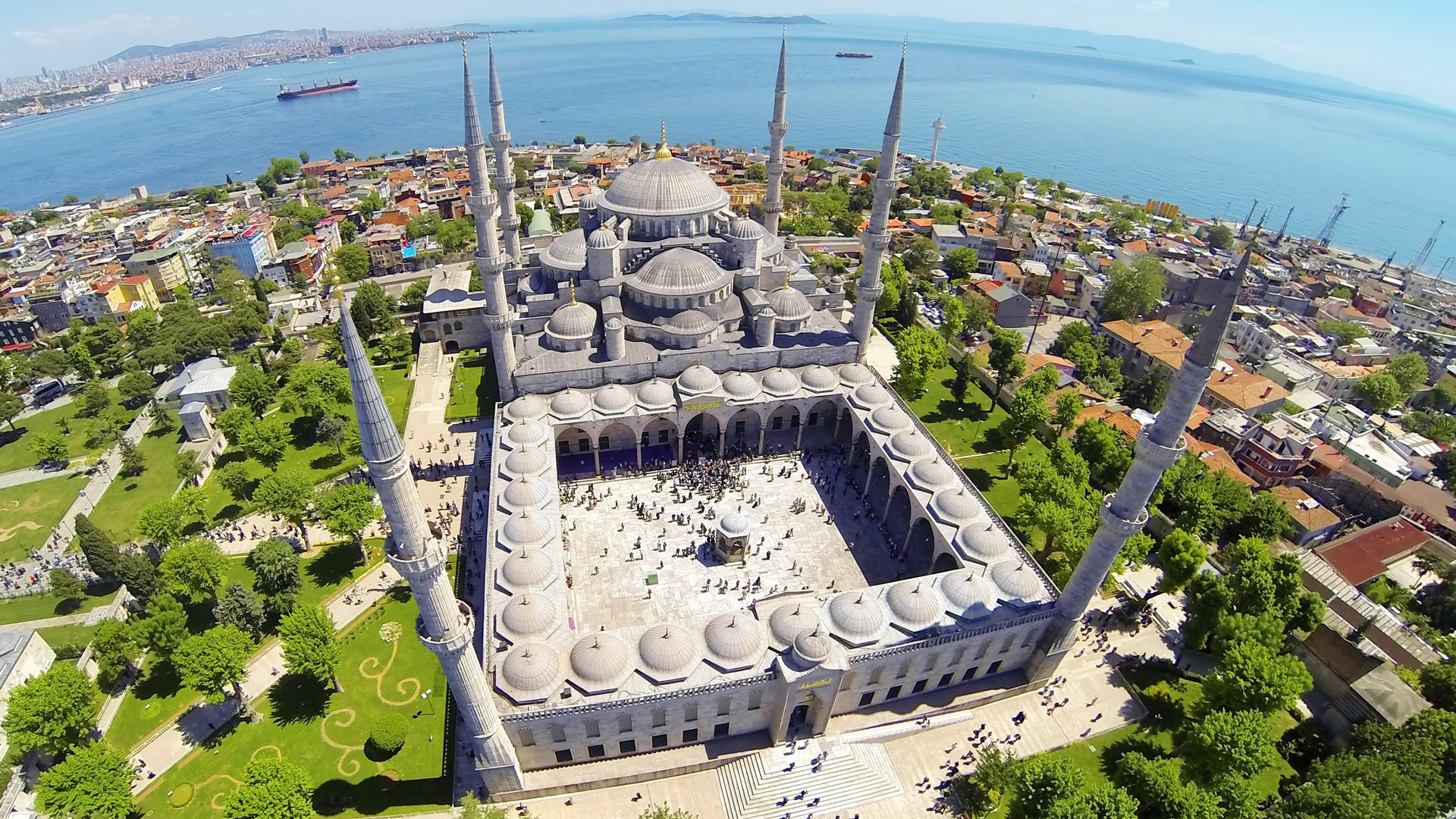
The mosque was commissioned by Sultan Ahmed I and built between 1609 and 1616 during the height of the Ottoman Empire. Designed by architect Sedefkâr Mehmed Aga, it reflects the classical Ottoman architectural style inspired by Byzantine and Islamic traditions. The goal was to create a structure that would rival Hagia Sophia in grandeur.
The nickname “Blue Mosque” comes from the thousands of blue Iznik tiles that decorate its interior. These handmade ceramic tiles feature floral and geometric motifs, filling the prayer hall with rich color and intricate detail. When sunlight enters through the stained-glass windows, the blue tones create a calm and almost mystical atmosphere.
Where is Blue Mosque on the Map?
Architecturally, the mosque is famous for its cascading dome system. A large central dome is supported by semi-domes, creating a balanced and harmonious design. The interior feels vast yet symmetrical, with massive pillars and detailed calligraphy enhancing the spiritual ambiance.
One of the most distinctive features of the Blue Mosque is its six minarets. At the time of its construction, this number caused controversy because it matched the number of minarets at the Grand Mosque in Mecca. According to tradition, an additional minaret was later added to the mosque in Mecca to resolve the issue.
The courtyard of the Blue Mosque is nearly as large as the prayer hall itself. Surrounded by arches and small domes, it provides a peaceful transition from the busy streets of Istanbul to the sacred interior. The central fountain once served for ablution rituals before prayer.
Today, the Blue Mosque remains an active place of worship while also welcoming millions of visitors each year. Tourists can enter outside prayer times, and modest dress is required. Its location makes it easy to combine with nearby attractions in the historic peninsula.
More than just a religious building, the Blue Mosque represents the cultural and artistic peak of Ottoman architecture. Its design, symbolism, and strategic position in Istanbul make it one of the most photographed and visited monuments in the world.
- Head of Performance Marketing
- Head of SEO
- Linkedin Profile: linkedin.com/in/arifcagrici