
Topkapi Palace
Topkapi Palace was the administrative heart of the Ottoman Empire for centuries, offering visitors a fascinating walk through imperial courtyards, ceremonial halls, and priceless collections overlooking the Bosphorus.
Topkapi Palace is one of the most important historical landmarks in Istanbul and a symbol of Ottoman imperial power. Overlooking the Bosphorus and the Golden Horn, the palace served as the political and administrative heart of the Ottoman Empire for nearly 400 years.
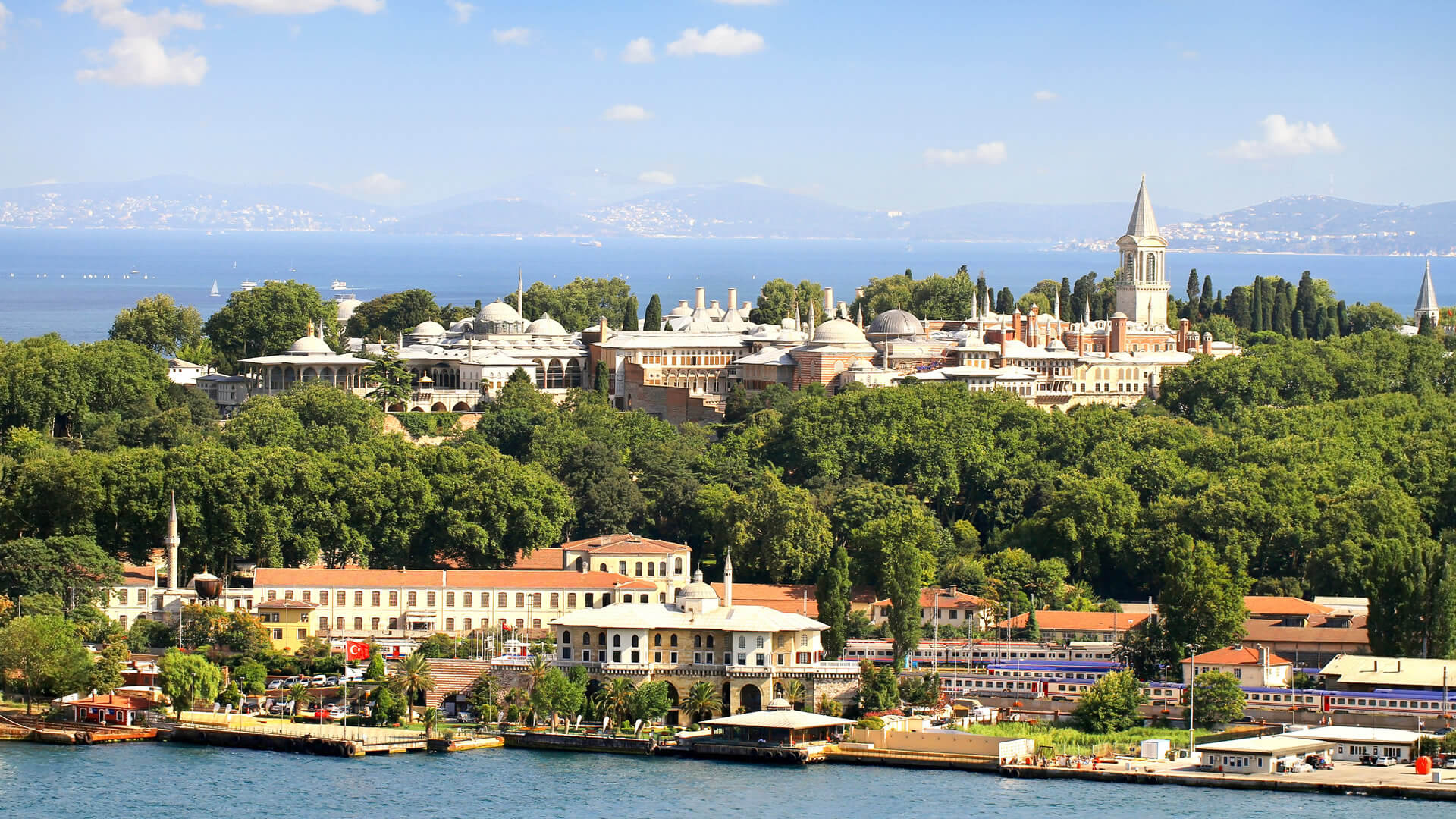
The palace was commissioned by Mehmed II shortly after the conquest of Constantinople in 1453. Construction began in 1459, and over the centuries, successive sultans expanded the complex. Rather than being a single building, Topkapi is a vast palace complex made up of courtyards, pavilions, kitchens, gardens, and chambers.
Where is Topkapi Palace on the Map?
The layout of the palace is organized into four main courtyards. The First Courtyard served as a public space, while the Second Courtyard housed administrative offices and the Imperial Council chamber. The Third Courtyard contained the private quarters of the sultan and the palace school, and the Fourth Courtyard featured beautiful gardens and pavilions with panoramic views.
One of the most fascinating sections is the Harem, where the sultan’s family and concubines lived. The Harem was a highly structured and hierarchical space, overseen by the Queen Mother (Valide Sultan). Its richly decorated rooms, tiled walls, and narrow corridors reflect both luxury and secrecy.
Topkapi Palace is also home to the Imperial Treasury, which displays priceless artifacts such as jewel-encrusted thrones, ceremonial weapons, and precious gems. Among the most famous objects are the Topkapi Dagger and the Spoonmaker’s Diamond, both symbols of Ottoman wealth and craftsmanship.
Another significant section is the Sacred Relics Chamber, which contains items believed to be associated with the Prophet Muhammad and other important Islamic figures. This part of the palace highlights the Ottoman sultans’ role not only as political rulers but also as caliphs of the Islamic world.
In 1924, after the establishment of the Republic of Turkey, Topkapi Palace was transformed into a museum. Today, it attracts millions of visitors each year who come to explore its courtyards, exhibitions, and breathtaking views over Istanbul.
Topkapi Palace is more than a royal residence—it is a living record of Ottoman history, culture, and governance. Walking through its gates offers visitors a powerful journey into the world of sultans, imperial ceremonies, and centuries of empire.
- Head of Performance Marketing
- Head of SEO
- Linkedin Profile: linkedin.com/in/arifcagrici