
Who Won the 2024 US House Elections?

Explore the 2024 U.S. House election results map, showing Republicans' narrow 220–215 victory and what it means for the 2026 midterm elections.
2024 US House Election Results: Republicans Win a Narrow 220–215 Majority
The 2024 U.S. House elections saw Republicans retain control of the House of Representatives, securing 220 seats against 215 for Democrats in the November 5 election.
With just five seats separating the two parties, Republicans secured a slim majority in the 435-seat chamber. A minimum of 218 seats is needed to control the House, highlighting the closely divided political landscape ahead of the November 3, 2026 midterm elections.
2024 US House Election Results Map: Republican vs Democratic Seats by State
2024 US House Election Results Map
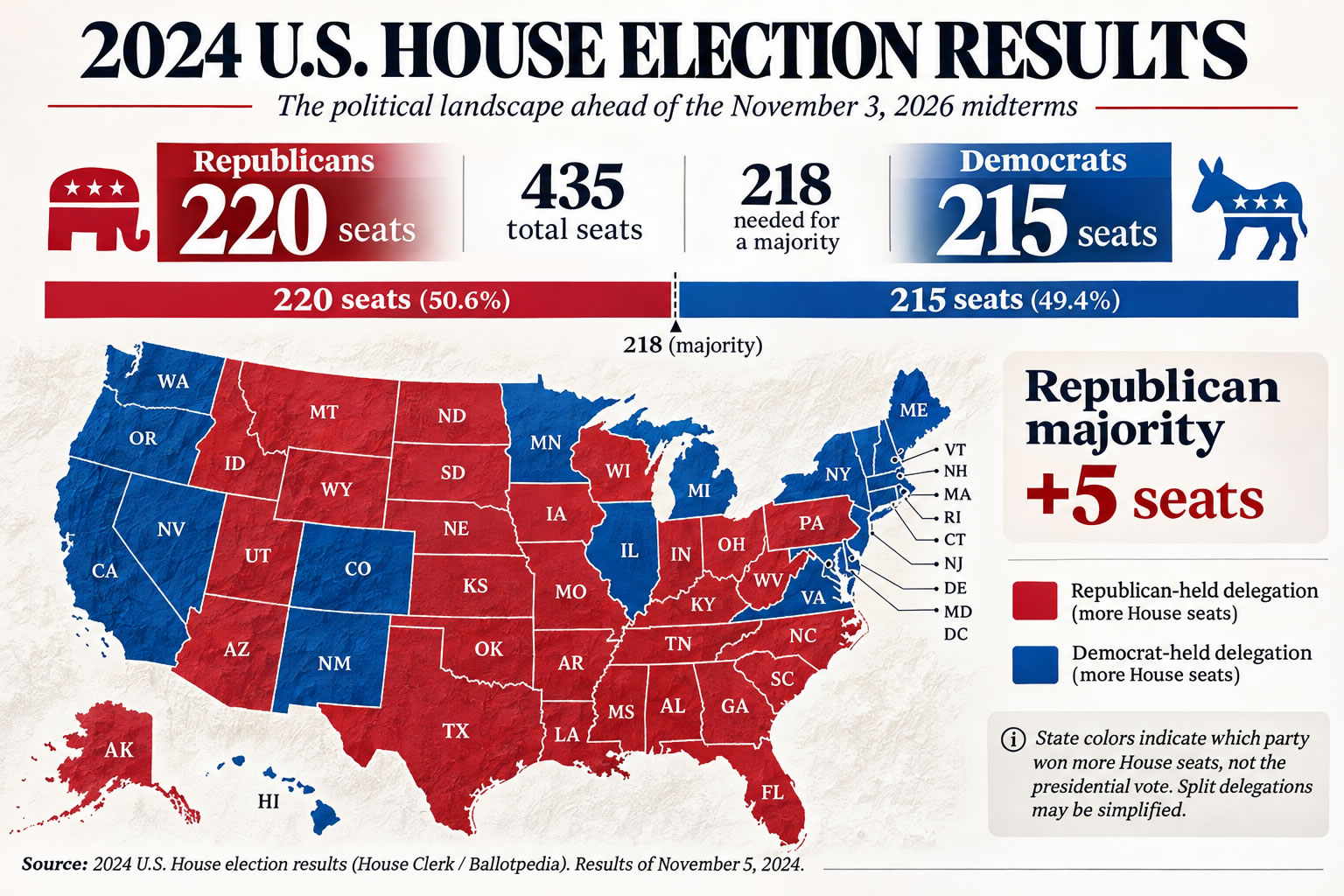
The 2024 US House election results map highlights the political divide between Republicans and Democrats across the 50 states. Red indicates states where Republicans won more House seats, while blue represents states where Democrats secured a larger share of the congressional delegation.
Republicans maintained strong support across the Southern and Central United States, winning numerous congressional districts in states such as Texas, Florida, Tennessee and Alabama. Democrats secured significant representation along the West Coast, in the Northeast and in major metropolitan areas, particularly in California, New York and Massachusetts.
Although the map provides an overview of the 2024 congressional election results by state, it does not reflect every individual district. Several states elected representatives from both parties, and the number of House seats allocated to each state depends on its population. These differences are important when examining the nationwide 220–215 seat distribution.
2026 US Midterm Elections: Can Democrats Reclaim the House?
2024 House Popular Vote And Seat Total In Each US State
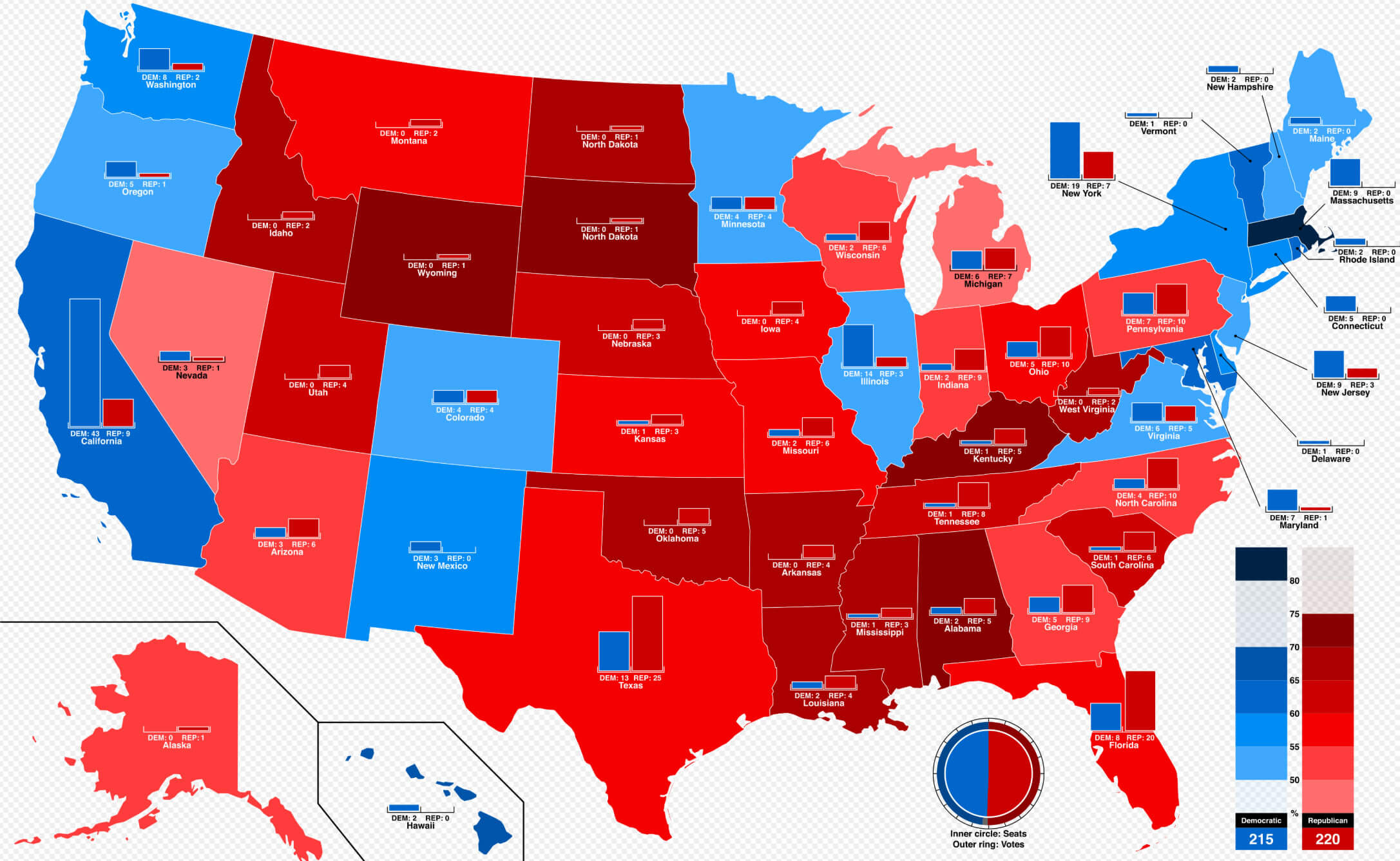
On November 3, 2026, voters across the United States will head to the polls to elect all 435 members of the U.S. House of Representatives. The 2026 midterm elections will determine which political party controls the House during the final two years of President Donald Trump's second term.
Following their narrow 220–215 victory in the 2024 House elections, Republicans face a closely contested battle to maintain their congressional majority. Democrats, meanwhile, are seeking to flip Republican-held districts and regain control of the chamber. With only a five-seat difference in the 2024 results, even a relatively small shift in voter support could change the balance of power in Congress.
Several competitive congressional districts in key battleground states, including California, New York, Pennsylvania, Michigan and Arizona, are expected to attract significant attention. The results in these districts could prove decisive in determining whether Republicans retain their House majority or Democrats secure enough seats to take control.
The outcome of the 2026 US House elections will have major implications for American politics, including federal spending, immigration policy, economic legislation and congressional oversight. A Democratic majority could create additional challenges for President Trump's legislative agenda, while continued Republican control could make it easier for his administration to advance its policy priorities.
2024 US House Election Seat Distribution: Republicans vs Democrats
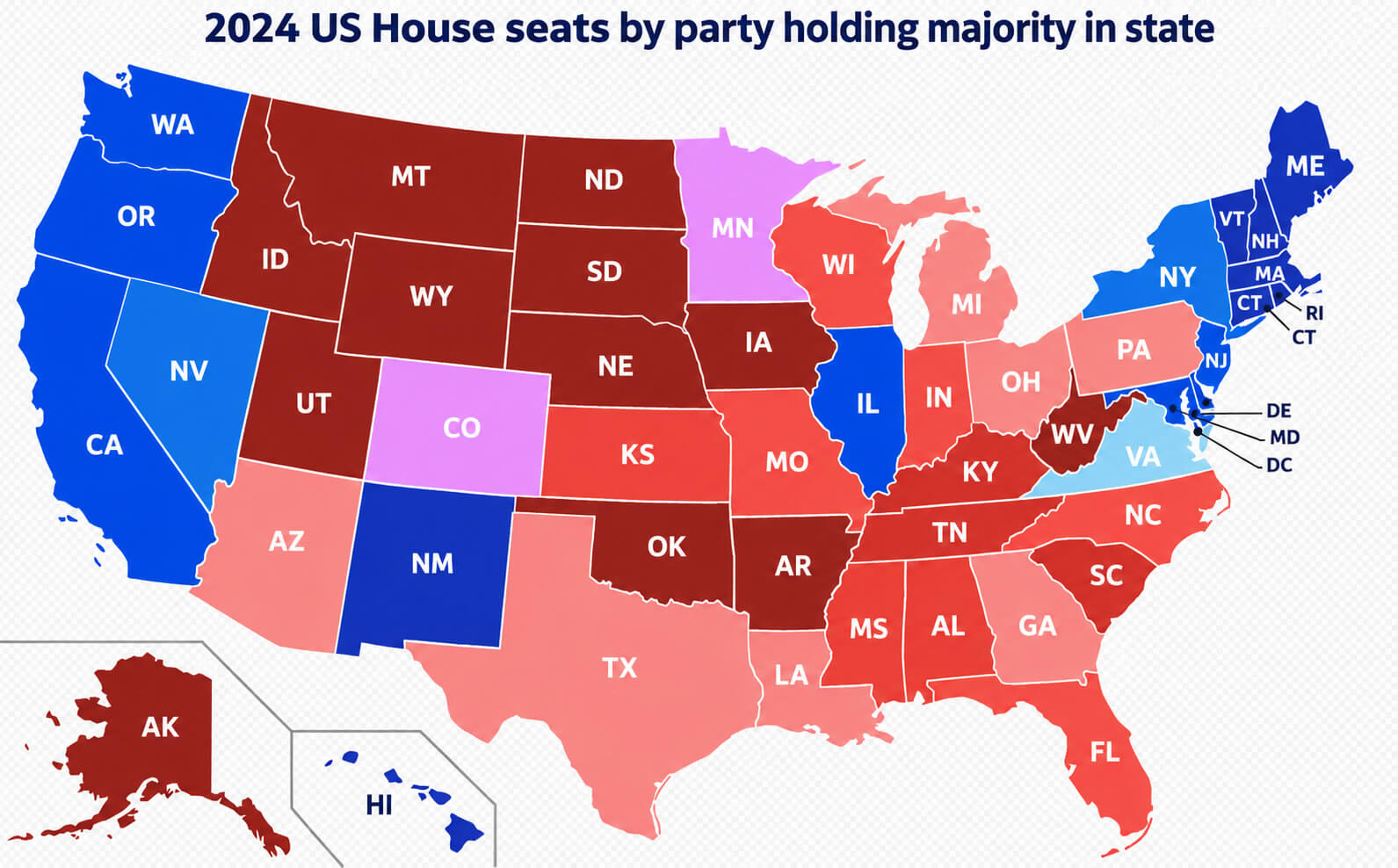
November 5 2024 United States House Elections Results
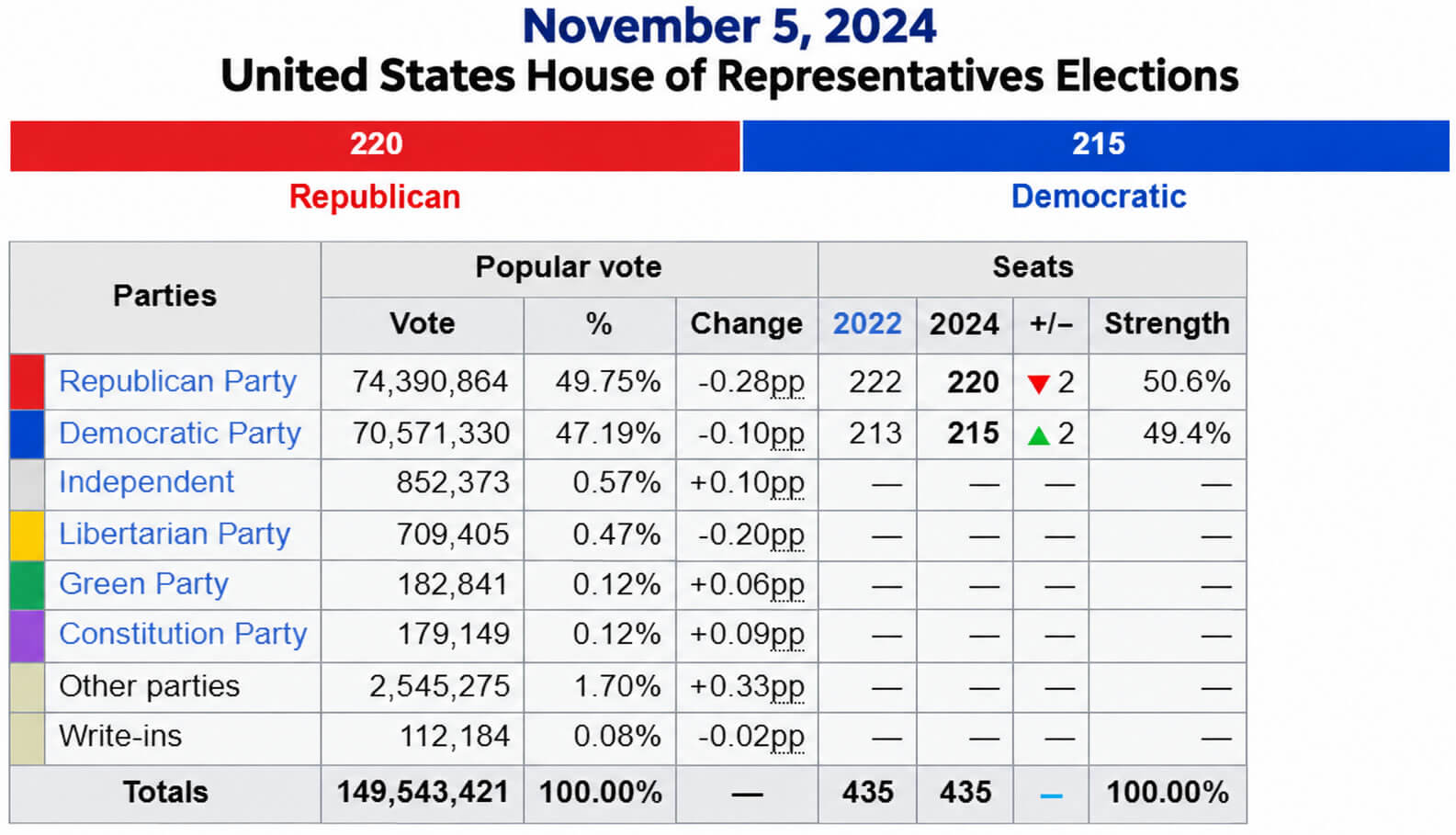
2024 US House Seats By Party Holding Majority In State
| Political Party | Seats Won | Percentage |
|---|---|---|
| Republican Party | 220 | 50.6% |
| Democratic Party | 215 | 49.4% |
| Total | 435 | 100% |
Map data: November 5, 2024 U.S. House elections. Republicans: 220 seats. Democrats: 215 seats. Total: 435 seats.